
Airlearn - Language Learning
Airlearn TechEducation
4.63.77K Reviews
- Version
- 3.13.11
- Installs
- 5.00M
- Age Rating
- Everyone
Screenshots


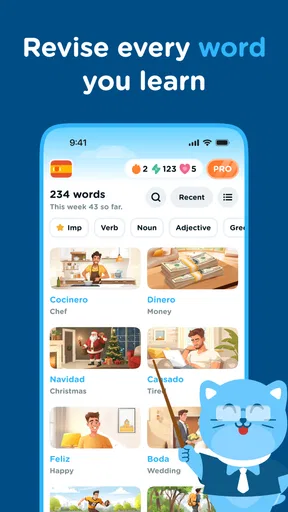

Our Review of Airlearn - Language Learning
 Analysis by Appyee
Before deciding whether Airlearn - Language Learning is worth your time, I’d separate its appeal from its cost. It’s a free education app from Airlearn Tech, and that makes it easy to try without committing money up front. There are in-app purchases, priced from $4.99 to $124.99 per item, so some paid options are available too. I wouldn’t assume that paying is necessary to begin, or that a purchase automatically makes the lessons a better fit; I’d first explore the free experience and decide what, if anything, I’m missing.
The price range deserves a little care: it describes the available in-app purchases, not a single subscription price or a promise about what each item includes. If you’re considering paying, check the purchase details shown in the app and weigh them against how regularly you expect to study. For a casual learner, the free starting point may be enough to establish a habit. Someone who has a specific goal and uses the app consistently may judge a paid option differently, but only after seeing what it actually offers.
What I’d want from a language app
For me, value isn’t simply the amount of material on a screen. A useful study tool should make it easier to return tomorrow, give me practice that fits a real situation, and help me notice where I’m getting stuck. Airlearn’s stated range of languages makes it appealing if you’re choosing among several popular learning goals, but the best choice is still the language you have a reason to use. Browsing a long menu is not the same as making progress.
I’d treat this as a way to build a regular learning routine, not as a shortcut to fluency. A few minutes on a busy day can keep a language present in your mind, while a longer session can give you room to review and reflect. The practical test is whether the lessons help you recall and use what you have studied after closing the app. If you only tap through activities to maintain momentum, it may feel rewarding without giving you the practice you need.
Making the routine useful
A realistic way to use a language-learning app is to tie it to a moment that already exists in your day: a quiet break, a commute when you are not driving, or the time after dinner when you can focus. I’d choose one regular slot and keep the goal modest at first. If I were preparing for a trip, for example, I’d connect each session to a practical need—greeting someone, asking a simple question, or understanding a common reply—and then revisit the phrases later rather than treating each lesson as a separate task.
One useful habit is to keep a short list of words or expressions that still feel uncertain, then make those the focus of your next review. Another is to say answers aloud when you can, even if you are studying in a quiet room alone. Recognition is easier than producing language from memory, so a lesson that feels simple while you are looking at prompts may need another pass without them. This kind of self-check is useful whether you are studying Spanish for family conversations or beginning Japanese out of personal interest.
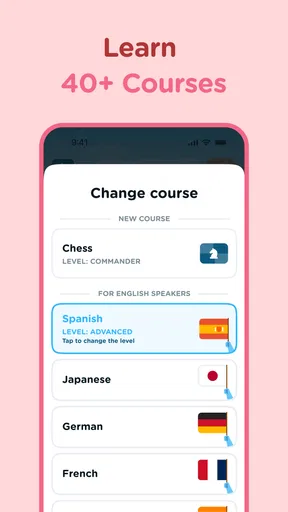
Airlearn covers Spanish, French, Japanese, Korean, German, Chinese, Russian, and Italian. That range gives a learner room to choose a new direction in one app, but it also means I’d avoid switching languages whenever the first lessons become difficult. Early frustration is normal, especially when a writing system or pronunciation feels unfamiliar. Staying with one clear goal long enough to build a routine is likely more useful than sampling several courses without a plan.
How it fits beside other options
Compared with a textbook, Airlearn is easier to pick up for a short session and can make practice feel less like homework. A book may still be better when you want to pause over a detailed grammar explanation, mark up a page, or follow a carefully ordered reference. Compared with a class or a conversation partner, an app is more convenient for independent practice, but it cannot replace the give-and-take of a person responding naturally to your words. I see Airlearn as a possible part of a learning mix, rather than the only tool every learner needs.
That distinction matters most if your goal is speaking confidently in unpredictable situations. A structured lesson can help you prepare and rehearse, but real conversations involve interruptions, varied accents, and replies you did not expect. If that is your priority, pair app study with opportunities to speak to people or with a tutor. If your main aim is to establish a first foothold in a language, practise regularly, or refresh familiar material, a self-guided app may suit you better.
Airlearn is rated 4.7 on average from around 35,000 ratings, and it has more than a million installs. Those figures suggest that many people have tried it, but I wouldn’t treat popularity as proof that its teaching style suits everyone. It is rated for Everyone, and its current version is 3.12.48. For me, the more personal measure is whether I can keep using it without turning study into another obligation.
Getting Started with Airlearn
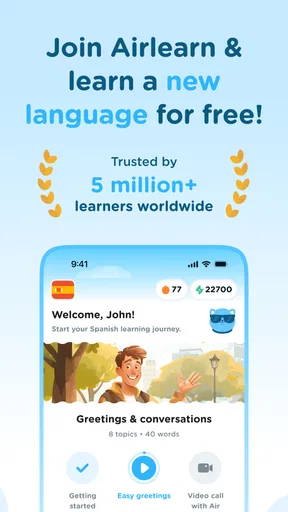
First things first, downloading Airlearn - Language Learning is a breeze. Available for both Android and iOS, it’s just a tap away in your app store. Once you’ve got it, setting up is straightforward. You select the language you want to learn, and voilà, you’re ready to roll.
The app’s interface is sleek and user-friendly. You won’t find yourself scratching your head wondering where to go next. It’s intuitive, and everything is laid out in a way that just makes sense. Whether you're a tech-savvy millennial or someone who still prefers the feel of a paperback, you’ll find navigating this app a walk in the park.
Features That Stand Out
One of the coolest features of Airlearn is its use of gamification. Learning a new language can sometimes feel like a chore, but Airlearn makes it feel more like a game. You earn points, unlock levels, and even get badges for completing tasks. It’s like turning language learning into a personal quest. This feature alone kept me coming back for more.
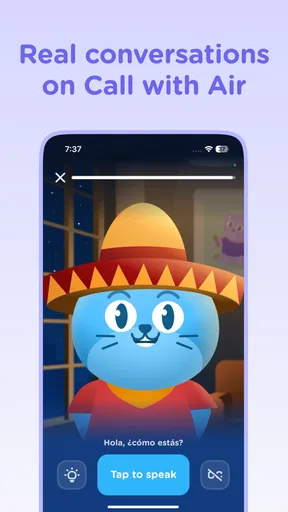
Another standout is the real-life conversation practice. The app includes interactive dialogues that mimic real-world scenarios. So, whether you’re learning Spanish or Japanese, you get to practice speaking as if you were actually in a conversation. The app’s voice recognition technology is pretty spot-on too, which helps in perfecting pronunciation.
Oh, and let’s not forget the customizable study plans. This is perfect for anyone juggling a busy schedule. You can tailor your learning to fit your lifestyle, whether you’ve got five minutes on the bus or an hour to spare at home.
Learning Experience
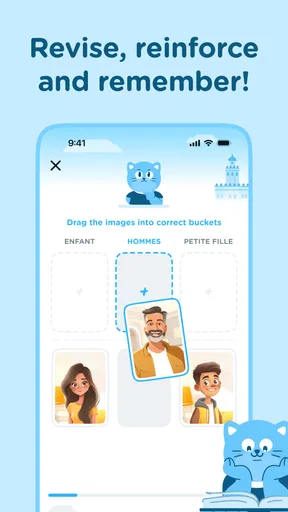
My favorite part of Airlearn is the diversity in learning materials. The app doesn’t just stick to one method. It offers a mix of videos, quizzes, audio lessons, and even cultural tips. I found this particularly useful because it kept things fresh and engaging. Plus, the cultural insights are a nice touch, giving you a deeper understanding of the language you’re learning.
The app also has a community feature where you can connect with fellow learners. It’s like having your own support group to share experiences and tips. This aspect adds a social layer to the learning process, making it even more enjoyable.
Personal Thoughts
Honestly, I’ve tried a bunch of language apps before, but Airlearn stands out because of its comprehensive approach. It doesn’t just throw vocabulary at you and hope for the best. Instead, it immerses you in the language, making learning a holistic experience.
However, no app is perfect, and there were moments when I wished for more nuanced explanations on grammar rules. Yet, the app seems to be continuously updating, so I'm hopeful these will be improved over time.
I’d be cautious about choosing this as my sole resource if I needed detailed grammatical instruction, careful feedback on extended writing, or unscripted speaking practice. Those goals usually call for a reference book, teacher, or real conversation partner alongside app lessons. Airlearn seems better suited to frequent, bite-sized study and supported practice than to answering every question a serious learner will eventually have.
It may also be a poor fit if you dislike game-like motivation or prefer a completely self-directed course with extensive explanations. Points and levels can encourage a return visit, but they are not the same as understanding. I’d use them as a nudge, not as a measure of language ability. If a lesson feels confusing, slowing down and reviewing it is more valuable than racing to the next badge.
For a beginner, I’d start by choosing one language and a small, repeatable study window, then pay attention to which activities actually help recall. For someone returning to a language, I’d use the app to rebuild a habit while noting the gaps that need more focused study. A learner who already speaks at an advanced level may find the guided approach less useful than conversation, reading, or specialist materials tailored to their needs.
All in all, if you’re serious about picking up a new language, or just want to dabble in something new, Airlearn - Language Learning is definitely worth a try. It’s engaging, flexible, and most importantly, effective. So, why not give it a shot and start your language learning journey today?
My buy-or-skip verdict
I’d try Airlearn if I wanted a low-friction way to begin studying one of its supported languages, especially if short sessions and a varied lesson style help me stay engaged. The free access lowers the barrier to testing that fit, while the in-app purchases mean I’d inspect the specific offer before spending. I’d skip it as a stand-alone solution if my main need were deep grammar instruction or spontaneous conversation with people. As a starting point and a routine-builder, though, it looks worth exploring—provided I judge progress by what I can remember and use, not by how many activities I complete.
Verdict
Strengths of Airlearn - Language Learning
- User-friendly interface enhances learning.
- Wide variety of languages available.
- Interactive lessons keep engagement high.
- Offline mode for learning on the go.
- Regular updates with new content.
Limitations of Airlearn - Language Learning
- Requires subscription for full access.
- Limited free content available.
- Occasional app crashes reported.
- No live tutor interaction included.
- Pronunciation feature needs improvement.
Similar Picks in This Category
View All
Duolingo: Language Lessons
Duolingo4.7

Google Classroom
Google LLC2.8

Unacademy: Learn & Crack Exams
Unacademy3.2

Bible App for Kids
Life.Church4.4

Cake - Learn English & Korean
Cake Corp.4.7

Brainly: AI Homework Helper
Brainly4.5
Frequently Asked Questions
What languages can I learn with Airlearn?
Airlearn offers a wide variety of languages for users to learn, including popular options like Spanish, French, German, and Mandarin, as well as less commonly taught languages such as Finnish and Swahili. The app is designed to cater to both beginners and advanced learners, providing comprehensive resources for each language.
Is Airlearn suitable for beginners?
Yes, Airlearn is designed with beginners in mind. It offers structured lessons that start from the basics and gradually increase in difficulty. The app includes interactive exercises, pronunciation guides, and vocabulary builders to help new learners establish a solid foundation in their chosen language.
Does Airlearn require an internet connection?
While an internet connection is required for initial downloads and updates, Airlearn offers offline mode for most of its lessons and exercises. This feature allows users to continue their language learning journey even without a constant internet connection, making it convenient for users on the go.
Are there any in-app purchases in Airlearn?
Airlearn is free to download and offers a variety of free resources. However, there are premium features available through in-app purchases. These may include advanced lessons, personalized tutoring sessions, and additional language resources that can enhance the learning experience.
Can I track my progress with Airlearn?
Absolutely. Airlearn includes a comprehensive progress tracking system that allows users to monitor their learning journey. It provides detailed insights into completed lessons, vocabulary acquisition, and areas needing improvement, which can help users stay motivated and achieve their language goals.
